Proven Strategies to Secure Unrestricted Operating Support for Nonprofit Growth
Learn how to frame your operational needs as strategic investments and position your nonprofit as a capable and visionary partner ready for sustainable impact.
.avif)

Categories
Publish Date
Services
Share


For nonprofit leaders, the pursuit of funding often feels like a puzzle with mismatched pieces. While project-specific grants are essential, they frequently leave critical gaps in the very foundation of an organization—the core operations that make all mission-driven work possible. This constant struggle to cover salaries, upgrade technology, and invest in infrastructure can stifle growth and limit long-term impact. The solution lies in a more flexible and empowering form of financial partnership: unrestricted operating support.
This type of funding is not just about keeping the lights on; it's the high-octane fuel that powers sustainable growth, innovation, and resilience. Securing it, however, requires more than a standard grant application. It demands a strategic approach that demonstrates your organization is not just a worthy cause, but a sound investment in the future.
What are restricted and unrestricted funds for a nonprofit?
In the nonprofit sector, funding is generally categorized into two types: restricted and unrestricted. Restricted funds are grants or donations earmarked for a specific project, program, or expense. Funders dictate exactly how this money can be used, offering little to no flexibility. For example, a grant might be restricted solely to purchasing supplies for an after-school program, which is a form of program support.
In contrast, Unrestricted Funds, often called general operating support (GOS), are contributions that an organization can use at its discretion to advance its mission. This funding covers essential core costs like staff salaries, rent, technology upgrades, and professional development—the vital infrastructure that supports every program and service a nonprofit delivers. This flexibility empowers organizations to allocate resources to their most pressing needs, ensuring the entire organization remains healthy and effective.
The Imperative of Unrestricted Operating Support for Growth
For nonprofits to scale their impact, they must be able to invest in their own capacity. Restricted funding, while valuable, often perpetuates a cycle where organizations are rich in programs but poor in infrastructure. Unrestricted Operating Support breaks this cycle. It empowers leaders to make strategic decisions, from hiring key personnel to adopting new technology that enhances efficiency. This flexibility is not a luxury. It is required for any nonprofit that wants to move from surviving to thriving. It allows the innovation and stability needed to meet the changing needs of its community.
What This Article Will Cover: A Strategic Playbook for Nonprofits
This article serves as a strategic guide for securing the general operating support that is critical for growth. We will go beyond the basics. We will give you practical strategies to prepare your organization, build a strong case, and develop funder relationships. These steps are needed to win this important funding. You will learn how to frame your operational needs as strategic investments and position your nonprofit as a capable and visionary partner ready for sustainable impact.
Defining Unrestricted Operating Support and its Core Value
Unrestricted operating support, or GOS, is funding that gives a nonprofit the freedom to allocate financial resources where they are most needed. Its core value lies in the trust it places in an organization's leadership to know how best to achieve its mission. This support covers the true costs of running a nonprofit, including administrative salaries, fundraising expenses, Technology Infrastructure, and other Overhead Costs that enable programs to succeed. It is an investment in the organization's overall health and organizational effectiveness.
Why Flexible Funding is Critical for Nonprofit Growth and Sustainability
Flexible funding is the bedrock of organizational resilience and growth. It allows nonprofits to be nimble and adaptive, seizing opportunities and weathering crises without being constrained by rigid grant requirements. This stability enables long-term planning, fostering an environment where innovation can flourish. Organizations with reliable operating support can invest in professional development to keep top talent. They can also upgrade systems to improve service delivery. Additionally, they can build cash reserves to ensure sustainability. These actions strengthen their ability to serve their community effectively for many years.
What challenges do nonprofits face when relying on restricted funding instead of unrestricted support?
Relying primarily on restricted funding creates significant operational hurdles. It often leads to the "nonprofit starvation cycle," where organizations underfund essential infrastructure because those costs are difficult to cover with project-specific grants. This results in overworked staff, outdated technology, and an inability to invest in long-term strategy. It also hampers innovation, as there are no flexible funds to pilot new ideas or respond to emerging Community Needs that fall outside the scope of existing grant agreements. This reactive posture makes it nearly impossible to pursue deep, lasting systems change.
Building a Compelling Case for General Operating Support
Securing GOS begins with a powerful narrative that connects your organization's operational health directly to its mission impact. Your case should go beyond simply stating you need money for overhead. Instead, articulate how investing in your infrastructure—such as skilled staff or efficient technology—will directly enhance your programs and expand your reach. Frame GOS not as a handout but as a strategic partnership that will unlock a higher level of performance and community benefit.
Demonstrating Robust Financial Health and Operational Capacity
Funders providing unrestricted support are investing in the organization as a whole, so they need to see evidence of strong stewardship. This means presenting clean financial audits, maintaining a clear and realistic budget for the fiscal year, and having sound internal controls and Financial operations. Beyond financials, demonstrate operational capacity by showcasing a strong leadership team, an engaged Board of Directors, and well-defined processes for Fund development. This proof of stability and competence, often verified during site visits, builds the trust necessary for funders to make a flexible investment.
Articulating Vision for Growth, Innovation, and Future Impact
A compelling case for GOS must be forward-looking. Present a clear and inspiring vision for where your organization is headed and how unrestricted funding will help you get there. Detail your plans for scaling successful programs, exploring innovative solutions, or strengthening your community partnership efforts. Show funders that you have a strategic plan for growth and that their investment will serve as a catalyst for achieving a greater, more sustainable impact and encourage responsible risk-taking.
Strategies for Securing Unrestricted Operating Support
Nonprofits can access Unrestricted Operating Support primarily through Grant Funding from various sources. These include foundation grants, particularly from those that have adopted trust-based philanthropy models. Many community foundations and some private foundations focus on general operating support. They do this because they know it helps build strong local organizations. Another key avenue is through individual giving programs, especially major donor cultivation, where relationships are built around a shared vision. Corporate grants and sponsorships can also sometimes provide unrestricted funds, though they may require more creative partnership framing.
What strategies can nonprofits use to increase their chances of receiving unrestricted operating support?
To boost their chances of securing Unrestricted Grants, nonprofits should focus on demonstrating exceptional organizational effectiveness and a clear vision for growth. This includes sharing impact through clear data and storytelling. It also means keeping clean financial records. Building strong, open relationships with potential funders is important too. Tailoring grant applications to explicitly connect operational needs with mission outcomes is crucial. Furthermore, building a diverse base of funding sources shows stability and reduces reliance on any single source, making the organization a more attractive investment for funders looking to provide flexible capital.
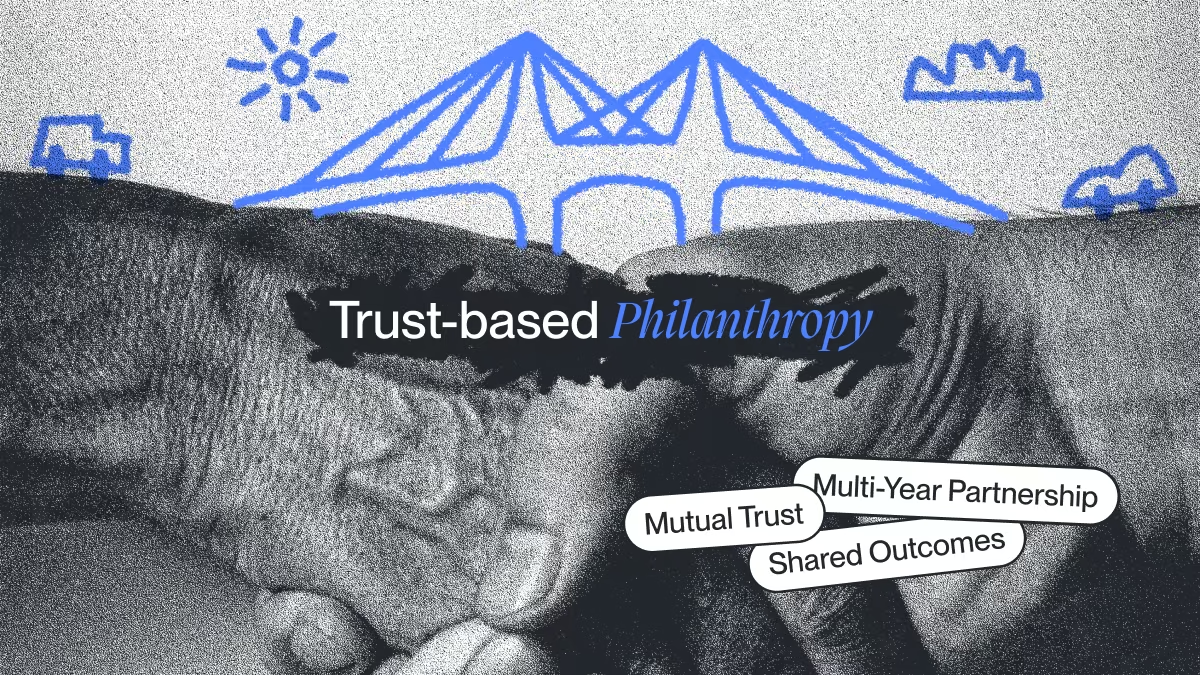
The Rise of Trust-Based Philanthropy and Its Implications for Unrestricted Funds
A significant shift is underway in the philanthropic world toward trust-based practices. This approach reimagines the funder-grantee dynamic as a partnership, moving away from restrictive oversight and toward mutual trust. A core tenet of this philosophy is providing multi-year, unrestricted funding through Trust-based grants. For nonprofits, this trend presents a major opportunity. It signals that a growing number of funders understand that those closest to the issues are best equipped to make decisions, and are therefore more willing to provide the flexible capital needed for real impact and emergent action.
Prioritizing Racial and Social Equity, Diversity, and Inclusion in Your Mission and Operations
Modern funders are increasingly prioritizing organizations that are deeply committed to diversity and inclusion (DEI). This goes beyond token statements; it requires a genuine integration of equity principles into your mission, programs, leadership, and operational practices. Clearly explaining how your nonprofit advances social and racial equity in your community can help in grant applications. Showing how you create an inclusive internal culture can also be a strong advantage. This aligns your organization with the main values of many progressive funders who see GOS as essential for funding the deep, internal DEI work needed to build authentic community power.
Identifying Funders Who Champion Unrestricted Support for Growth
The key to securing GOS is finding the right funding opportunities. Research foundations that explicitly state a preference for providing general operating support in their guidelines. Look for those who speak the language of trust-based philanthropy, capacity building, and organizational effectiveness. Resources like the Foundation Directory Online can help identify potential partners. Focus your efforts on funders whose mission and values align closely with your own, as these are the most likely to invest in your long-term vision.
Researching and Vetting Potential Funder Partners Aligned with Growth Objectives
Effective fundraising is strategic. Before starting the online application, invest time in deep research. Go beyond a foundation's website to read their annual reports, review lists of past grantees, and understand the background of their program officers. Look for alignment not just in focus area (e.g., public health, Native Arts Ecology Building), but also in grant size and type. A funder who consistently provides large, multi-year operating grants within your geographic area is a better prospect for a growth-oriented request than one who only funds small, project-specific initiatives.
Cultivating Relationships Beyond the Grant Application
The most successful funding partnerships are built on relationships, not transactions. Seek opportunities to connect with funders before you apply. Attend their informational webinars, engage with their staff at community events, or request an introductory call with program officers. This approach changes the application process from a cold submission into an ongoing conversation. It lets funders understand and trust your organization's work and leadership better.
Making a Strong Initial Approach: Letters of Inquiry and Strategic Connections
Your first contact with a funder sets the tone for the entire relationship. If they accept Letters of Inquiry (LOIs), craft a concise and compelling document that clearly articulates your mission, your need for operating support, and your vision for growth. Reference the funder's specific interests to show you've done your homework. Leverage your network—board members, current funders, and community partners—to see if they can facilitate a warm introduction, which can often be more effective than a cold outreach.
Framing Your Narrative: Connecting Operational Needs to Mission Impact and Scalability
A winning proposal for operating support tells a story of cause and effect. Do not simply list your operational expenses in your funding request. Instead, frame them as strategic investments. For example, explain that funding for a new Grant Management Platform is an investment in efficiency that will free up staff time to serve 15% more clients. Connect every dollar requested for infrastructure, salaries, or technology directly to a tangible improvement in your programs and a measurable increase in your community impact.
Beyond the Budget: Justifying Core Operating Costs as Strategic Investments for Growth
Your budget narrative is a critical tool for justification. Instead of presenting salaries as a mere expense, describe them as investments in the expert talent required to deliver high-quality services. Frame technology upgrades, such as utilizing AWS Promotional Credit for cloud technology credits, not as a capital cost, but as a strategic tool for enhancing data collection and achieving digital transformation. This reframing helps funders see "overhead" for what it truly is: the essential engine of your mission and a key part of Build Investments.
Demonstrating Measurable Impact and Future Growth Potential Through Data and Storytelling
Combine quantitative data from Impact Reports with compelling human stories to create a holistic picture of your impact. Use metrics to demonstrate the effectiveness of your past work, then use those results to project your future growth potential with the help of Unrestricted Funds. Show funders how their investment will lead to specific, measurable outcomes. A powerful narrative about a single individual whose life was changed by your work can bring your data to life, answering key evaluation questions before they are even asked.
Examples of Funders Leading the Way in Unrestricted Support (Illustrative)
Several prominent foundations and corporations champion unrestricted funding. The Surdna Foundation and The Gates Foundation have long histories of making strategic investments in organizations. The Weingart Foundation in Southern California also focuses on unrestricted support. They support organizations that advance racial and social justice. Initiatives like Press Forward are mobilizing large-scale GOS for specific sectors.
In the technology space, programs like AWS for Nonprofits offer critical resources. The AWS IMAGINE grants provide not just funds but also access to Amazon Web Services' technical expertise, showcasing AI's transformative potential. Likewise, Google's nonprofit advertising program offers in-kind support that functions like flexible funding for outreach. These examples, from the Skoll Foundation to the Draper Richards Kaplan Foundation, show a growing trend toward trusting nonprofits with flexible capital.
The Advantages of Long-Term, Flexible Funding for Stability and Innovation
Securing multi-year unrestricted support is a game-changer for nonprofits. This long-term flexible funding provides unparalleled stability, allowing organizations to move beyond a short-term, grant-to-grant mindset. It empowers leadership to engage in meaningful strategic planning, make long-term commitments to staff, and invest in multi-year initiatives aimed at complex systems change. With a secure financial foundation, organizations have the breathing room to experiment, take calculated risks, and pursue the kind of innovation that leads to breakthrough impact.
Conclusion
Securing unrestricted operating support is not just another fundraising goal; it is a strategic imperative for any nonprofit committed to sustainable growth and deep community impact. The journey requires a fundamental shift in approach—from chasing project-specific grants to building compelling cases for organizational investment.
By using the strategies here, your nonprofit can get the resources it needs. Connect operational needs to mission impact. Justify core costs as investments. Use data with powerful storytelling. This will help strengthen infrastructure, keep top talent, and encourage innovation. By showing strong financial health, explaining a clear future vision, and building real relationships with funders, you can make your organization seem trustworthy and effective. The philanthropic landscape is increasingly recognizing that flexible funding is the key to unlocking a nonprofit's full potential, ensuring the stability of grantee organizations and empowering them to build a better future.
Have a project or idea?
We believe in the hard work people are doing to address the world's most pressing problems. Every day, our agency fights to turn visions of social change into concrete realities.

How to Create a Donation Page for Fundraising & Giving Days

Proven Strategies to Secure Unrestricted Operating Support for Nonprofit Growth
4 Strategies for Communicating with Your Corporate Sponsors

Unleashing Maximum Impact: Why Foundations Choose a Spend-Down Model