Unleashing Maximum Impact: Why Foundations Choose a Spend-Down Model
The Strategic Shift to Spend-Down Philanthropy

Categories
Publish Date
Services
Share


Are you ready to amplify your impact?
Reach out to our team to discuss how we can help you show the impact of your work.
Introduction: The Strategic Evolution Towards Finite Philanthropy
In the world of philanthropy, the traditional model of a perpetual foundation, designed to exist forever, has long been the standard. However, a strategic evolution is underway. A growing number of private foundations are challenging this paradigm, choosing instead to operate with a defined lifespan. This approach, known as a "spend-down" model, is not about ending philanthropy but about redefining its impact. It represents a deliberate shift from preserving capital for the future to deploying all available resources to address the urgent challenges of today. This article explores why foundations are embracing this finite approach, how it maximizes their impact, and what it means for the communities and organizations they serve.
Introduction: The Strategic Evolution Towards Finite Philanthropy
Defining the Spend-Down Model: A Deliberate Choice for Impact
Why do some foundations choose to be spend-down rather than permanent? The decision is rooted in a belief that the full force of their capital can achieve more by addressing current, pressing needs than by being distributed in smaller increments over an infinite timeline. Donors and board members who adopt this model are often driven by a desire to see the tangible results of their giving within their lifetimes. They view their resources not as an endowment to be preserved, but as risk capital to be fully invested in solving problems, empowering communities, and creating lasting change on an accelerated schedule.
The Shifting Landscape: Why Foundations Are Embracing a Defined Lifespan
What is a spend-down foundation and how does it operate?
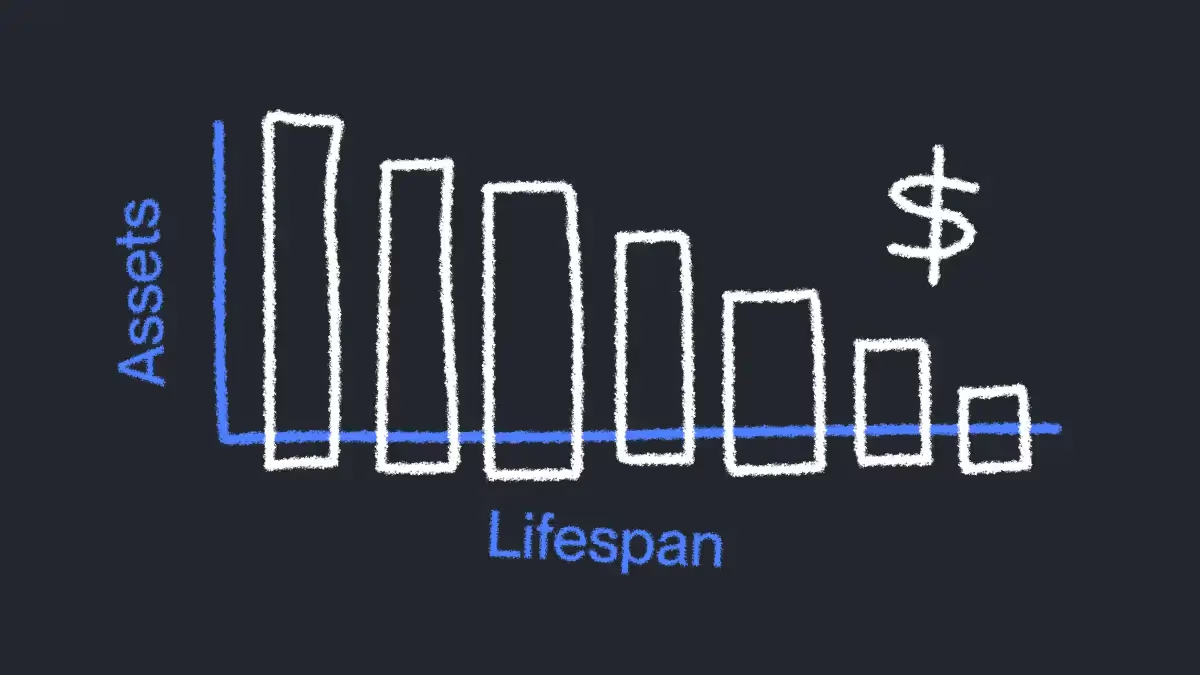
A spend-down foundation is a philanthropic organization with a predetermined end date. Instead of only spending about 5% of their endowment income each year, they spend all their main capital over a set time. This time could be 10, 20, or 50 years. (Johnson Center on Philanthropy, 2025) This operational model requires a clear spend-down strategy, meticulous financial planning, and a focused mission to ensure all resources are deployed effectively before the foundation closes its doors.
What are the key differences between spend-down and perpetual foundations?
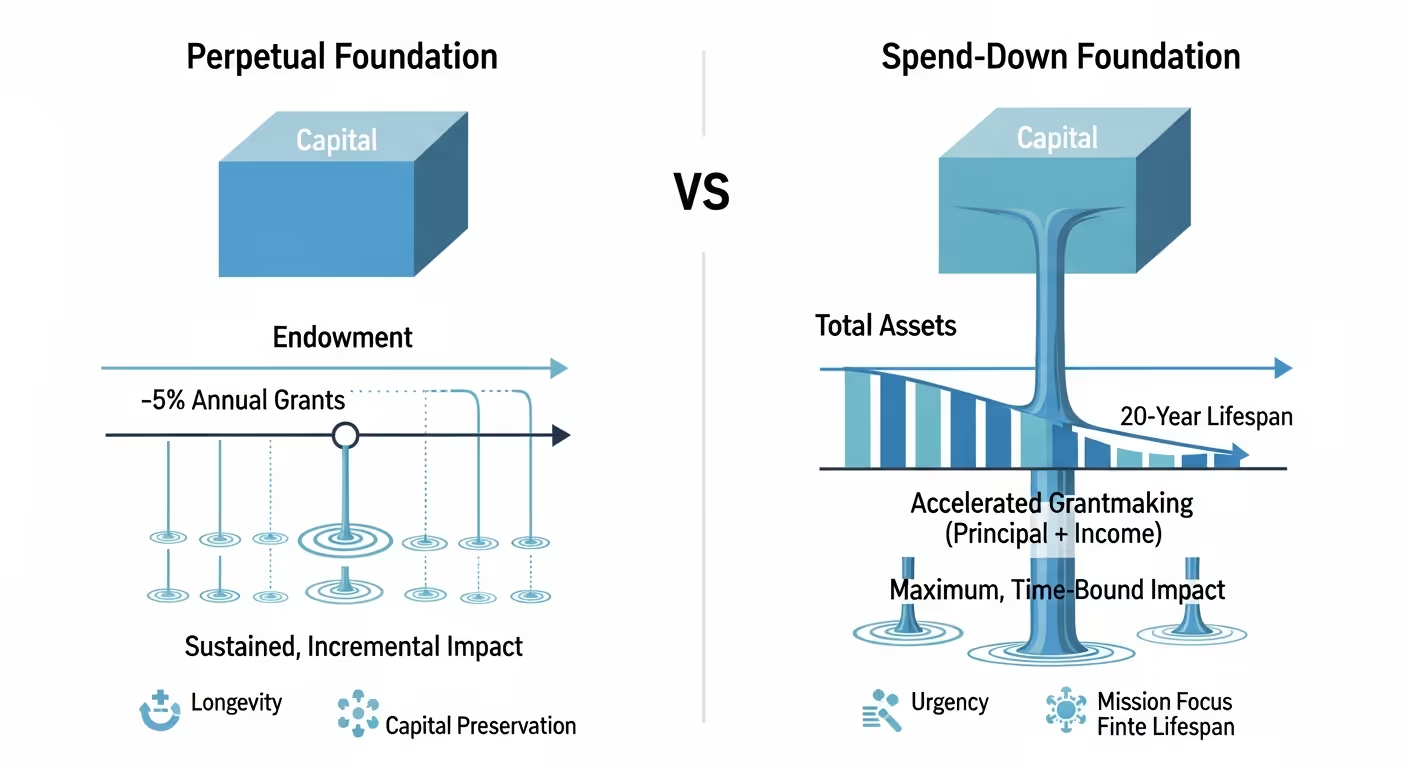
Perpetual foundations want to last a long time. They spend only the income from investments. Spend-down foundations use all their assets. They do this to have the biggest impact in a set time.
The primary difference lies in their time horizon and financial management. Perpetual foundations want to last a long time. They carefully manage their endowment to give grants forever. Spend-down foundations, by contrast, prioritize immediate impact. Their grantmaking is often larger and more ambitious, as they are not constrained by the need to preserve capital. This finite lifespan also influences their internal culture, risk tolerance, and relationship with grantees, fostering a greater sense of urgency and partnership.
What are common reasons foundations opt for spend-down strategies?
Foundations adopt a spend-down strategy for several key reasons. Many donors want to ensure their original intent is honored without being diluted by future generations of board members. Others are driven by an urgency to tackle critical societal issues like climate change or racial justice, believing that waiting is not an option. Family foundations, in particular, may choose this path to engage living family members directly in the philanthropic process and to avoid creating a perpetual bureaucracy.
Beyond Perpetuity: Setting the Stage for Unleashing Maximum Impact
Choosing to spend down is a declaration of intent. It signals a foundation's commitment to go "all in" on its mission. By not aiming to last forever, these organizations can use all their financial and strategic power. They aim for big changes within one generation, not small steps.
The Strategic Imperative: How a Spend-Down Model Maximizes Impact
The Urgency Dividend: Accelerating Change with Finite Resources
A finite timeline creates a powerful sense of urgency that permeates every aspect of a foundation's work. This "urgency dividend" compels the board and staff to act decisively, focusing resources on problems where immediate intervention can make a significant difference. Spend-down foundations do not spread grants thinly over many years. They focus their money. This speeds up progress. It can help reach important points for social change that might be impossible otherwise.
Fostering Bolder Bets and Transformative Philanthropy: Moving Beyond Incremental Change
Freed from the constraints of endowment preservation, spend-down foundations are uniquely positioned to make bolder, more transformative bets. They can provide the significant, multi-year funding that allows organizations to scale proven models, innovate new solutions, and build long-term capacity. This approach moves philanthropy beyond funding projects and toward investing in the core strength and sustainability of the organizations driving change on the ground.
Concentrated Capital for Pressing Challenges: Focused Impact in Action
The spend-down model enables foundations to concentrate their full financial might on a limited number of issues. By defining a clear endgame, they can strategically deploy resources to make a measurable and conclusive impact in a specific field. For example, a foundation focused on a public health issue can fund research, policy advocacy, and community outreach at the same time. They do this on a scale meant to end the problem, not just control it.
Deepening Engagement and Fostering True Partnership: Empowering Grantee Organizations and Communities
Knowing their time is limited, spend-down foundations often cultivate deeper, more collaborative relationships with their grantees. They become active partners, offering not just financial resources but also strategic support and network access. This partnership is built on trust and a shared goal: ensuring the grantee organization and the community members it serves are stronger and more sustainable long after the foundation has closed.
Embracing Agility and Innovation: Adapting to Evolving Needs with Speed
Spend-down foundations do not have the slow-moving nature of perpetual organizations. This lets them be very flexible. They can pivot their strategy to respond to emerging needs and opportunities, reallocating resources quickly without disrupting a long-term financial plan. This flexibility lets them try new grantmaking methods. They can support advanced work. Traditional philanthropy might see this work as too risky.
Operationalizing Impact: Crafting a High-Impact Spend-Down Strategy
The Spend-Down Roadmap: Strategic Planning for a Defined Mission
A successful spend-down requires more than just increased annual giving; it demands a comprehensive strategic roadmap. This plan outlines the foundation's ultimate goals, a clear timeline for disbursing its capital, and the metrics by which it will measure success. It serves as a guide for all grantmaking decisions, ensuring every dollar is aligned with the mission.
What are best practices for managing the spend-down process effectively?
Good management uses careful financial planning. This plans how to allocate assets during the foundation's life. It also requires transparent communication with grantees about timelines and exit strategies. Internally, the board must maintain focus on the mission while navigating the operational and human resource challenges of winding down an organization.
How does spend-down philanthropy influence long-term social impact planning?
Spend-down philanthropy focuses on building capacity and sustainability. Because the foundation will not be a permanent source of funding, it has a vested interest in helping its grantees diversify their revenue, strengthen their leadership, and build endowments of their own. The goal is to create a lasting impact that continues well beyond the foundation’s final grant.
What challenges do spend-down foundations face during grant allocation and closure?
Key challenges include managing grantee expectations and avoiding the creation of a "funding cliff" as the end date nears. Foundations must also plan for the preservation of their institutional knowledge and legacy. Attracting and retaining talented staff who know their jobs have a fixed term can also be a significant operational hurdle.
Dynamic Board Governance: Leading with Purpose and Foresight in a Finite Context
The board of a spend-down foundation plays a critical role. It must provide strong oversight for the strategic plan, ensure financial stewardship aligns with the timeline, and champion the foundation's mission with unwavering focus. Governance in this context is less about preservation and more about purposeful execution.
Grantmaking Strategies for Accelerated Impact: Leveraging Multi-Year and Capacity-Building Grants
To maximize impact, spend-down foundations frequently utilize large, multi-year grants that provide stability and allow organizations to plan for the long term. They also invest heavily in capacity-building grants, which strengthen a nonprofit's core infrastructure—from technology and finance to leadership development—making them more resilient and effective.
Beyond Traditional Grants: Harnessing Strategic Investments for Exponential Returns
Many spend-down foundations look beyond traditional grants to program-related investments (PRIs) and other forms of impact investing. These tools can recycle capital and generate social returns alongside financial ones, amplifying the foundation's overall impact before its assets are fully expended.
Cultivating an Agile and Learning Culture: Investing in Human Capital and Knowledge Transfer
A spend-down foundation must foster a culture of learning and adaptation. This involves investing in staff development and creating systems to capture and share lessons learned throughout the spend-down journey. This knowledge transfer is a key part of the foundation’s legacy, benefiting the broader philanthropic sector.
Measuring Success and Amplifying Legacy: Ensuring Enduring Change
How do spend-down foundations measure impact differently than perpetual foundations?
While perpetual foundations may track progress incrementally over decades, spend-down foundations measure success against a defined set of "endgame" goals. Success is not measured by the foundation's longevity but by its ability to achieve its mission-specific objectives and empower its grantees to thrive independently by its closing date.
Defining and Tracking Impact: Metrics for a Mission with a Deadline
Impact metrics for a spend-down are tied directly to the strategic roadmap. They might include policy changes enacted, specific community health indicators improved, or the number of grantee partners who have achieved financial sustainability. The focus is on conclusive, measurable outcomes that signify a mission accomplished.
Building Grantee Sustainability: Empowering Long-Term Community Impact
A core component of a spend-down legacy is the strength of the organizations and communities left behind. This involves providing exit funding, connecting grantees to new donors, and supporting their efforts to build diverse and stable funding bases, ensuring the work continues to flourish.
Strategic Communications: Sharing Learnings and Inspiring the Broader Philanthropic Sector
Spend-down foundations have a unique opportunity to contribute to the field of philanthropy. They share their successes, failures, and important lessons in a planned way. This helps other funders learn and starts a bigger talk about how to get the most from philanthropy.
The Enduring Legacy: Ensuring Impact and Knowledge Live Beyond Foundation Closure
The ultimate legacy of a spend-down foundation is not its name on a building, but the enduring capacity of the organizations it supported and the lasting solutions it helped create. By investing in systems, knowledge, and people, its impact can reverberate for generations.
Case Studies in Impact: Lessons from Spend-Down Trailblazers
The Atlantic Philanthropies is a leading organization. It finished spending its $8 billion in 2020. It has shown how to do high-impact, time-limited philanthropy effectively. Their work advanced health equity, human rights, and education on a global scale. (Atlantic Fellows) Foundations like the Levitt Foundation have recently started spend-down journeys. (PR Newswire)They focus their resources on creative placemaking. This shows that this strategy can work in different areas to increase impact and help community change. These examples provide invaluable lessons for the growing number of donors and boards considering a finite path for their own philanthropy.
Have a project or idea?
We believe in the hard work people are doing to address the world's most pressing problems. Every day, our agency fights to turn visions of social change into concrete realities.
4 Strategies for Communicating with Your Corporate Sponsors

Unleashing Maximum Impact: Why Foundations Choose a Spend-Down Model
Proven Strategies to Secure Unrestricted Operating Support for Nonprofit Growth
.avif)
How to Create a Donation Page for Fundraising & Giving Days
