Mastering Branding for Community Foundations: A Strategic Roadmap to Greater Impact
Mastering the Four Phases of Strategic Branding for Community Foundations.
.avif)

Categories
Publish Date
Services
Share


Introduction: Beyond the Best-Kept Secret – Unlocking Greater Impact Through Strategic Branding
For too long, community foundations have been one of the social sector's "best-kept secrets." Local philanthropy groups connect passionate donors with important nonprofit work. They manage resources and encourage teamwork to solve the region's biggest problems. This quiet work often goes unrecognized. This causes missed chances for growth, fundraising, and deeper community engagement. The gap isn't in the work; it's in the story. Strategic branding is the bridge that closes this gap, transforming a foundation from a hidden gem into a recognized leader and a magnet for support. It’s not about flashy marketing; it's about articulating your mission with such clarity that it inspires action.
The Unique Role of Community Foundations in the Social Sector
Unlike a nonprofit focused on one issue, a community foundation has many roles. It acts as a grantmaker, a convener, a resource hub, and an endowment builder. This complexity is both a strength and a communication challenge. A community foundation must speak to many different stakeholders. These people include individual donors, financial advisors, nonprofit grantees, and civic leaders. Being a central philanthropic hub for an area needs a brand that shows trust, skill, and a strong, steady commitment to the local community.
Why Branding is a Strategic Imperative, Not Just a Marketing Tactic
The question isn’t whether your community foundation has a brand—it does. Your brand is your reputation, shaped by every interaction, grant, and communication. The real question is whether you are managing it intentionally. For a community foundation, branding is mission infrastructure. It’s the framework that ensures every stakeholder understands who you are, what you do, and why it matters. A strong brand shows your purpose clearly. It builds credibility that attracts funds. It also gives a unified voice to rally a community around a shared opportunity. It transforms abstract goodwill into tangible support.
What This Roadmap Will Cover: From Core Identity to Measurable Impact
This article gives a clear plan made for community foundation leaders and communication experts. We will move through four distinct phases, starting with the foundational work of defining your core identity. Next, we will explain how to create a strong brand identity. We will show how to spread your message across all channels. Finally, we will cover how to measure your success and keep your brand strong over time. This is your guide to unlocking greater impact by intentionally building and managing your most valuable asset: your brand.
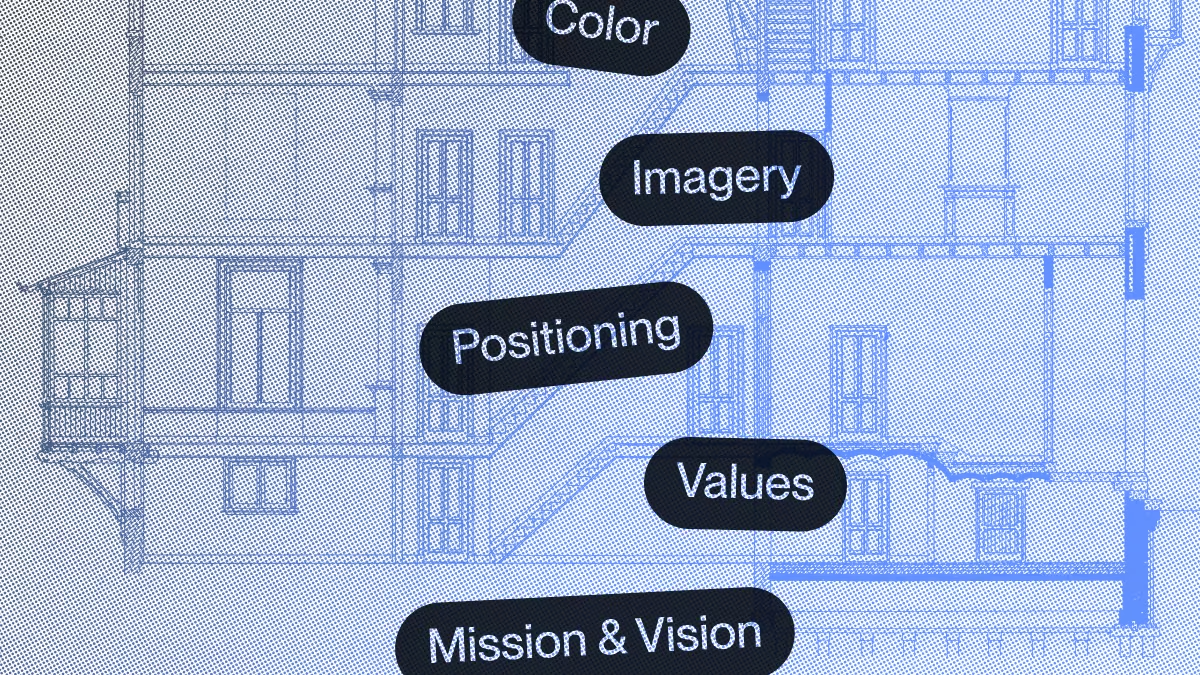
Phase 1: Foundation First – Defining Your Authentic Core Brand
Before designing logos or writing taglines, you must first look inward. The most powerful brands are built on a bedrock of authenticity. The first step is to find and clearly state the important truths about your organization. It involves a deep, honest assessment of your purpose, your unique value, your audiences, and your current reputation. This basic work makes sure your brand is real. It reflects your identity. It is a promise you can keep consistently.
Reaffirming Your Foundation's Mission, Vision, and Core Values
Your mission, vision, and values are the constitution of your brand:
- The mission is your "why"—the fundamental purpose of your existence.
- The vision is your "where"—the future you are working to create for your community.
- Your values are your "how"—the principles that guide your actions and decisions.
Revisit these statements. Are they clear, concise, and compelling? Do they still resonate with your board, staff, and key stakeholders? This is the critical first step in ensuring internal alignment before you can project a consistent message externally.
Identifying Your Unique Heritage, Knowledge, and Expertise
What makes your community foundation unique? Maybe you have served your area for a hundred years. Or you have strong knowledge in areas like education or protecting the environment. Or you have a special way to help local nonprofit groups work together. Find these unique features. This special knowledge and heritage are valuable brand assets. They build trust and set you apart from other giving options for donors. This is your unique value proposition, the core reason someone should choose to partner with you to achieve their charitable goals.
Understanding Your Stakeholders: A Deep Dive into Target Audience Persona Development
Your brand must resonate with multiple, distinct audiences. Make detailed profiles for your main supporters. Family donors come from different generations. Professional advisors, nonprofit leaders seeking funds, and community leaders looking for partners are also part of this group. What are their goals, motivations, and pain points? What information do they need from you? How do they prefer to receive communication? Knowing these audiences helps you adjust your messages and brand experience to fit their needs. This makes your foundation more relevant and useful to everyone.
Research-Based Branding: Diagnosing Current Perceptions and Uncovering Needs
You cannot chart a course to your destination without knowing your starting point. Do formal and informal research to learn how your stakeholders see your foundation now. This can include surveys, focus groups, and one-on-one interviews. Ask direct questions: What words come to mind when you think of us? What do you believe is our primary role in the community? This diagnostic step shows important gaps between your intended identity and your real reputation. It points out the specific challenges and chances your branding strategy must handle.
Phase 2: Crafting a Distinct and Consistent Brand Identity
With a clear understanding of your foundation's core truths, you can begin to build the external expressions of your brand. This phase is about translating your strategy into a tangible identity—the words, stories, and visuals that will represent you in the world. The goal is to build a clear and strong system that people remember and find meaningful. Every interaction should show your unique value with steady consistency.
Developing Your Compelling Brand Narrative and Storytelling Framework
Your brand narrative is the central story you tell about your organization. It should weave together your mission, your history, and your impact into a compelling arc. Who is the hero of your story? (Hint: It’s your community, your donors, and your nonprofit partners). What challenges are they facing, and how does your foundation guide them toward a better future? This story becomes the source for all your communication. It guides website text and fundraising appeals. It provides a consistent way to tell impact stories.
Visual Identity System: Crafting Your Logo, Brand Mark, Color System, and Typography
Your visual identity is the face of your brand. This system includes your logo, a strategic palette of colors, and selected typography. These elements should work together. They show your foundation's personality. It can be established and trustworthy, innovative and dynamic, or warm and friendly. Your logo is the visual shorthand for your mission, but the colors and fonts are what create a consistent feel across all materials. This system helps build instant recognition. It also builds professional trust.
Establishing Comprehensive Brand Guidelines for Unwavering Consistency
A brand identity can only reach its fullest potential when applied consistently across all touchpoints. To achieve this, brand guidelines act as the fundamental rulebook that specifies how your brand should be portrayed on diverse platforms and media channels. This detailed document gives clear instructions and standards for keeping the brand's integrity. It makes sure every representation, digital or print, matches the foundation's core values.
- correct logo usage,
- color codes,
- typography rules,
- and voice and tone for written communication.
This document is an important resource. It gives clear guidance to everyone involved with your organization, including staff, board members, and outside partners like designers and printers. These guidelines do not impose restrictions. They help each person in your organization act as a united brand ambassador. The goal is to ensure that the integrity and strength of your brand are consistently upheld across all forms of communication and presentation.
The Power of a Slogan: Crafting a Memorable and Impactful Message
A great slogan, or tagline, is a short, memorable phrase that captures the essence of your brand promise. It should be easy to understand and clearly articulate your value. For a community foundation, a strong slogan can quickly communicate your purpose, such as "For good. For ever." or "Connecting People Who Care with Causes That Matter." It acts as a strong base for your marketing and communication. It supports your main mission with one clear, strong statement.
Phase 3: Strategic Communication and Amplification Across All Channels
A well-defined brand identity is powerless if it isn't seen and heard. This phase focuses on activating your brand by strategically sharing your message across multiple platforms. The objective is to build awareness, foster engagement, and inspire action among your key stakeholders. It is about creating a communication system where every channel works together. This system tells a unified story and increases your impact.
Building an Integrated Communication Strategy: Bridging Marketing, PR, and Advocacy
Your communication should not exist in silos. A combined plan makes sure your marketing efforts like online ads and brochures match your public relations work like media contacts and events. It also aligns with your advocacy work like bringing leaders together and sharing research. All these support your main brand story. This creates a surround-sound effect. It repeats your key messages everywhere. It builds a strong reputation as a thought leader and an important community resource.
Digital Branding Ecosystem: Your Website as the Central Hub and Strategic Social Media Engagement
In today's world, your website is your digital front door and the central hub of your brand. It must be user-friendly, visually compelling, and clearly communicate your mission and impact. It is the primary resource for donors exploring ways to give, nonprofits seeking funds, and anyone wanting to learn more. Your social media should send people to your main website. The site should give current news, share impact stories, and join talks. This shows your foundation is active and responsive in the community.
Leveraging Traditional and Experiential Channels for Broad Reach and Deep Connection
Digital methods are important. But do not ignore traditional and hands-on channels. Your annual report is a strong chance for storytelling. It also shows good management. Print materials, direct mail, and local media placements can still be effective for reaching certain donor demographics. Events like donor thank-you parties, nonprofit workshops, or community meetings let people experience your brand directly. These events help build stronger, more personal connections with your supporters.
Empowering Your Board Members and Community Foundation Partners as Brand Ambassadors
Your most credible marketing resource is your people. Equip your board members, staff, and key partners with the talking points and stories they need to be effective brand ambassadors. When a board member can clearly articulate the foundation's unique value at a community event, it carries more weight than any advertisement. Make sure they understand the brand story. Help them feel confident sharing it in their personal and work networks. This will greatly increase your reach and influence.
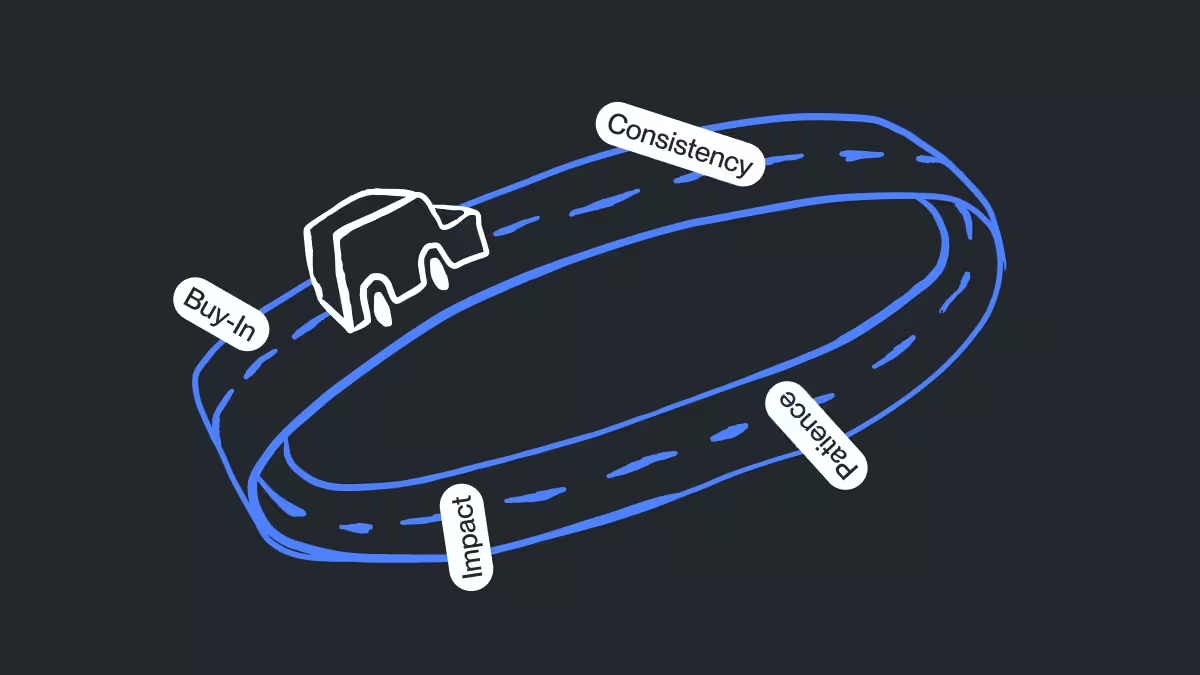
Phase 4: Measuring Impact and Sustaining Brand Resilience
Building a brand is not a one-time project; it is an ongoing process of management, adaptation, and reinforcement. This final phase is about ensuring your branding efforts are delivering a return on investment and are built to last. You need to define success and listen to feedback. You must keep consistency. You should position your foundation to take future chances with a brand that is strong and flexible.
Defining Success: Key Metrics for Branding ROI and Demonstrating Outcomes
Key metrics can include What are the key metrics and indicators used to evaluate whether a brand is achieving its desired success?
- website traffic and engagement,
- social media follower growth and reach,
- media mentions,
- and audience perception survey results.
Crucially, tie these to organizational goals.
Track increases in
- new donor inquiries,
- growth in specific funds,
- or attendance at events.
Demonstrating how a stronger brand contributes directly to fundraising and programmatic success is essential for securing ongoing support and resources for your communication efforts.
The Iterative Process: Gathering Feedback, Adapting, and Fostering Growth
A brand must evolve with your community and your organization. Create formal channels for gathering feedback from your stakeholders. Listen to what they are saying online and in person. Is your message resonating? Is your website meeting their needs? Be prepared to make iterative adjustments to your strategy based on this feedback. A resilient brand is not static; it is a living entity that learns and adapts over time.
Ensuring Brand Consistency Across All Internal and External Touchpoints
Sustaining your brand requires relentless vigilance. Consistency builds trust. When things are inconsistent, they cause confusion. Regularly check all your touchpoints. These include email signatures, voicemail greetings, grant applications, and event signs. Make sure they follow your brand guidelines. Internal communication is just as important. A brand that is lived and understood by staff is more likely to be communicated consistently to the outside world.
Branding for Long-Term Resilience and Future Opportunities
A strong brand is a strategic asset that builds equity over time. It gives you the trust and attention to lead new community projects. It helps you attract strong partnerships and handle crises while keeping public trust. When you invest in your brand now, you fix current communication problems. You also build a strong base that helps your group find new chances and serve your community for many years.
Real-World Impact: Case Studies in Branding Excellence
Across the country, community foundations that have invested in strategic branding have seen transformative results. For example, a foundation seen as a passive, transactional "philanthropic bank" changed its brand. It wanted to be seen as an active community leader and organizer. They used a new story, a lively visual style, and a focused communication plan. They attracted a new group of donors who care about their community. They also earned a leadership role in a big regional economic project. Their investment in branding directly unlocked a new level of impact and influence.
Lessons Learned: Navigating Branding Challenges and Adapting for Success
The journey is not always linear. A common challenge is securing initial buy-in from a board that may view branding as a non-essential "marketing" expense. The key lesson is to frame the investment in terms of mission and ROI, demonstrating how a clear brand directly supports fundraising and community leadership goals. Another lesson is the importance of patience. It takes time to shift long-held public perceptions. Successful foundations keep their messages consistent. They also celebrate small successes. They know that building a brand takes a long time, not just a short effort.
Conclusion: Your Strategic Roadmap to Enduring Community Impact
Changing your community foundation from a "best-kept secret" to a well-known community leader takes careful planning. It starts with a promise to understand and clearly state your core purpose. This plan shows four steps to guide your work. First, base your work on a true foundation. Second, create a clear identity. Third, spread your message carefully. Fourth, keep your brand strong for the long term.
A strong brand is not a luxury; it is the essential infrastructure that enables your mission. It builds trust that attracts donors. It creates clarity that aligns stakeholders. It makes your foundation visible to unlock new chances for teamwork and support. By doing this strategic work, you are not just starting a marketing plan. You are investing in your organization's future and its ability to make lasting, positive changes for the community you serve. The path is clear. The time to begin is now.
Have a project or idea?
We believe in the hard work people are doing to address the world's most pressing problems. Every day, our agency fights to turn visions of social change into concrete realities.

Mastering Branding for Community Foundations: A Strategic Roadmap to Greater Impact
Nonprofit Storytelling Guide: Tips & Examples

The Art of Nonprofit Branding: 3 Examples and Best Practices
